Interactive Lessons

Spatial reasoning

Branch 3
33topics60outcomes with applications137applications for MYP 4-5 Extended

Topics in this branch

← Back to the overview
3.14ExtendedEquivalent descriptions of one transformationFully covered

Geometry

3.14aOne transformation, several descriptions
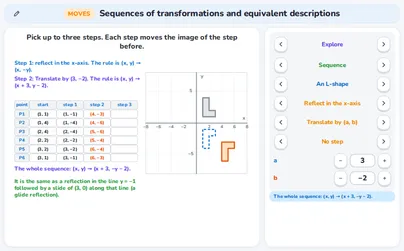
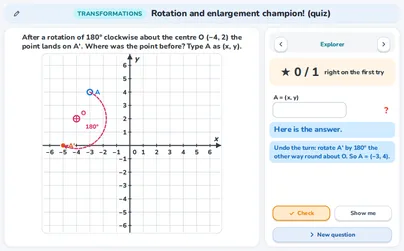
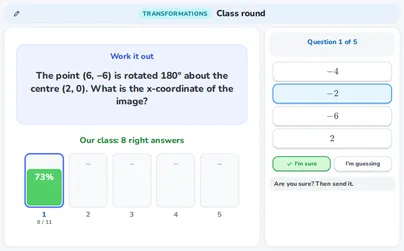
  1. 1Pupils show that one transformation can be described in more than one way, such as a half turn about a point and two reflections in perpendicular lines.1
← Back to the overview
3.15Triangle propertiesFully covered

Trigonometry

3.15aProperties of triangles
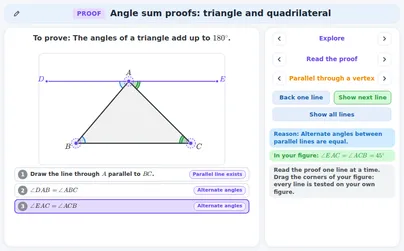
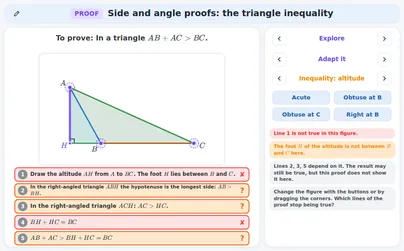
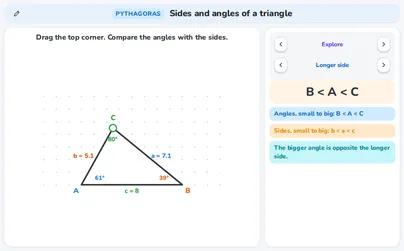
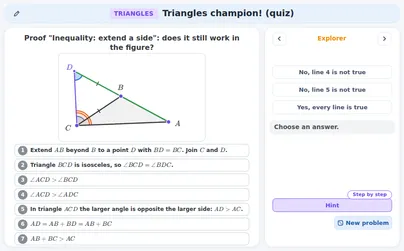
  1. 1Pupils use the angle sum and the exterior angle theorem to find missing angles, and use the angle-side relationships and the triangle inequality to compare sides and angles.4
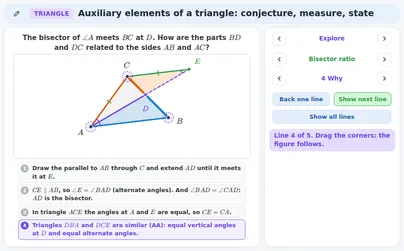
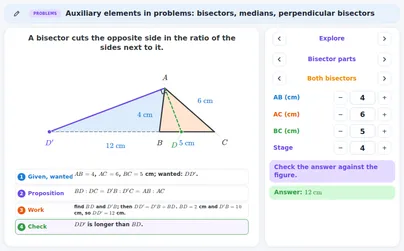
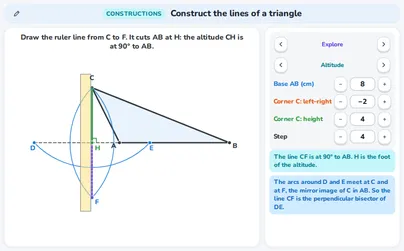
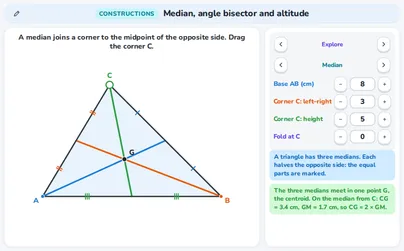
  2. 2Pupils identify and use medians, altitudes, angle bisectors, perpendicular bisectors and midsegments of a triangle, together with their properties.8
← Back to the overview
3.17Pythagoras' theoremFully covered

Trigonometry

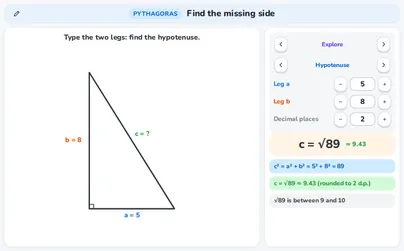
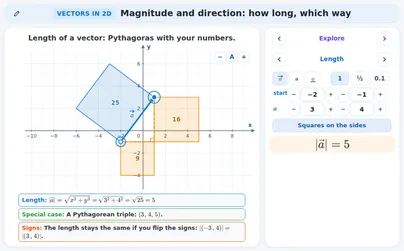
3.17aUsing Pythagoras' theorem
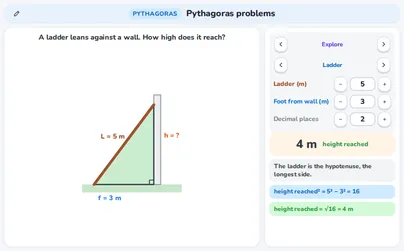
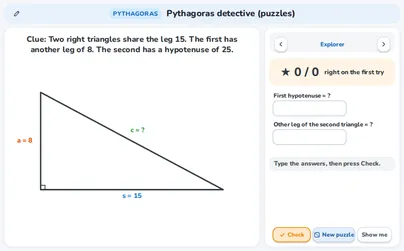
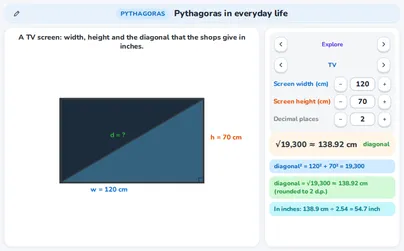
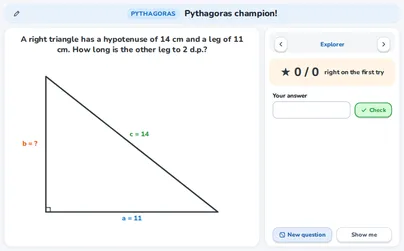
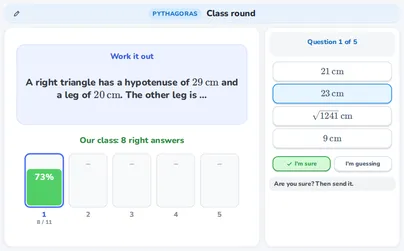
  1. 1Pupils use Pythagoras' theorem to find the length of a missing side of a right triangle, also in problems about distances.10
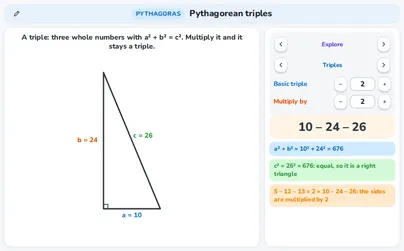
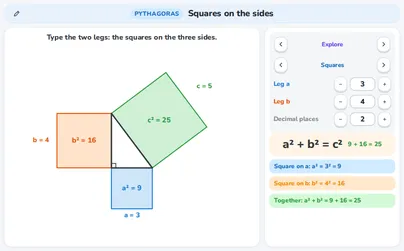
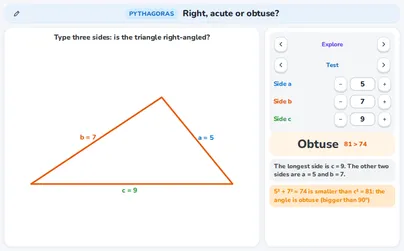
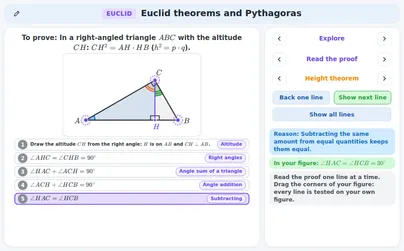
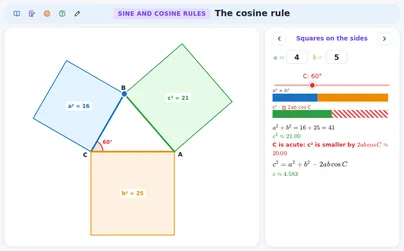
  2. 2Pupils explain a proof of the theorem, use its converse to test for a right angle, and use inequalities to decide whether a triangle is acute or obtuse.5
← Back to the overview
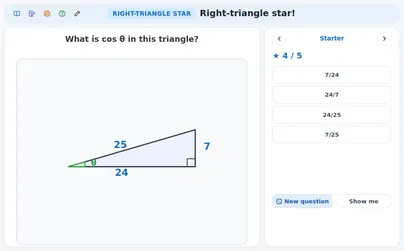
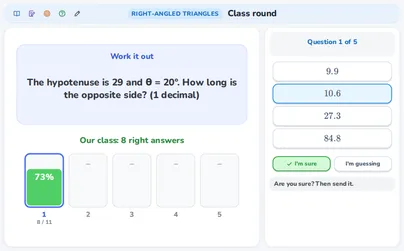
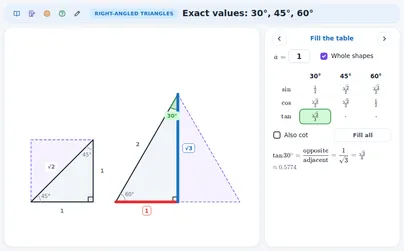
3.18Trigonometric ratios in right-angled trianglesPartly covered

Trigonometry

3.18bComplementary angles
  1. 1Pupils explain why the sine of an angle equals the cosine of its complement, and use this relationship to find missing values.

    No application yet for MYP 4-5 Extended. You teach this outcome in class.

3.18eSolve triangles
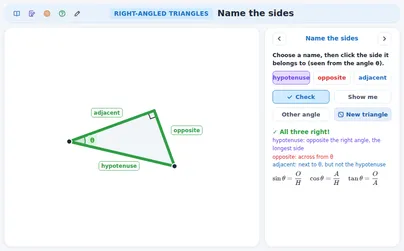
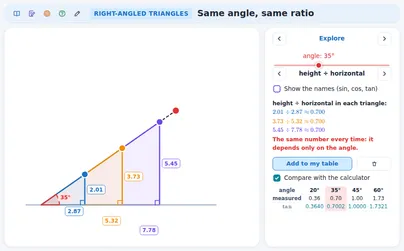
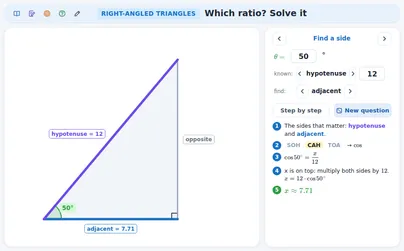
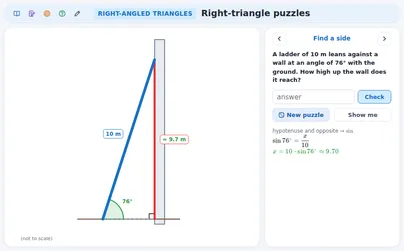
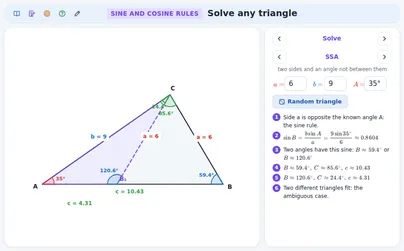
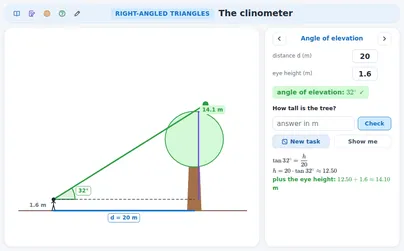
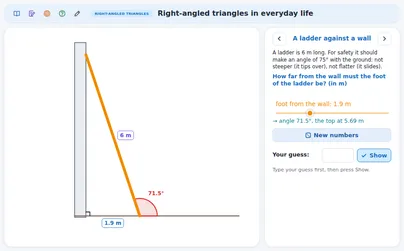
  1. 1Pupils use trigonometric ratios to find an unknown side length or angle measure, and solve a right triangle completely.11

For the outcomes without an application for MYP 4-5 Extended you complete the work in class.

← Back to the overview
3.19ExtendedConverse of Pythagoras' theoremFully covered
← Back to the overview
3.21ExtendedFractals: an informal introductionNo application yet for MYP 4-5 Extended

Enrichment

3.21aSelf-similar patterns
  1. 1Pupils explore fractals informally, such as the Sierpinski triangle, describing self-similarity and how a pattern repeats at smaller and smaller scales.

    No application yet for MYP 4-5 Extended. You teach this outcome in class.

No application yet for MYP 4-5 Extended. This topic is taught in class.

← Back to the overview
3.23ExtendedInscribing and circumscribing shapesPartly covered

Enrichment

3.23aCircles of a triangle and inscribed angles
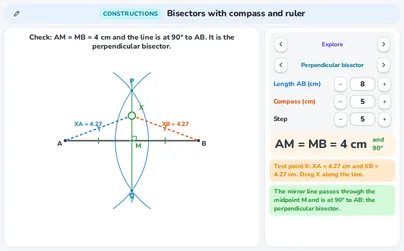
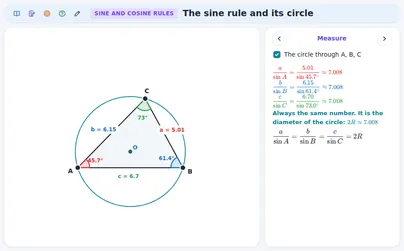
  1. 1Pupils construct the inscribed circle and the circumscribed circle of a triangle, locating the incentre and the circumcentre.

    No application yet for MYP 4-5 Extended. You teach this outcome in class.

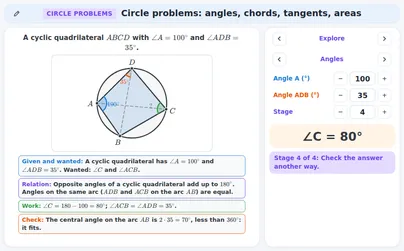
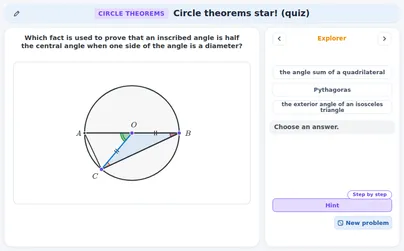
  2. 2Pupils use angles in inscribed right triangles and inscribed quadrilaterals to find unknown angles and to justify the results.3

For the outcomes without an application for MYP 4-5 Extended you complete the work in class.

← Back to the overview
3.25ExtendedPolar coordinatesFully covered

Enrichment

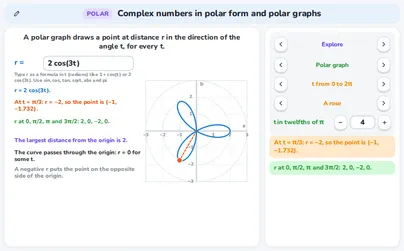
3.25aPolar form and polar graphs
  1. 1Pupils find the modulus and the argument of a complex number, and convert between rectangular and polar form in both directions.1
  2. 2Pupils recognise the shape of a graph from its polar equation, and match polar equations with their graphs.1
← Back to the overview
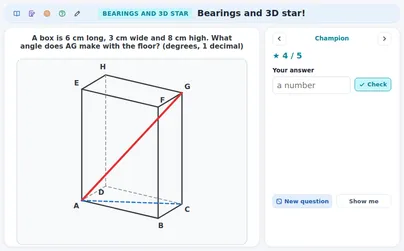
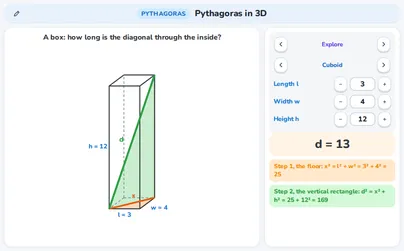
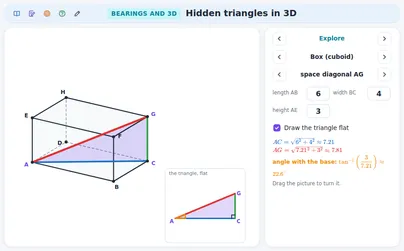
3.28ExtendedCoordinate geometry in three dimensionsFully covered
← Back to the overview