Number
1.12aStart times, end times and durations
1Pupils find the start time, the end time or the length of an event when the other two are known, also across noon or midnight, in timetables and everyday plans.4
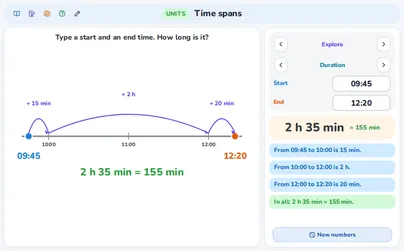 Time spans: durations, converting time, timetablesTwo tools for time: how long it lasts on a time line, and changing between units of time.Open
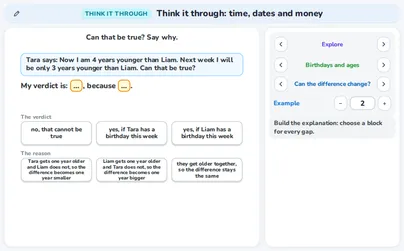 Think it through: time, dates and moneyTime and money in problems: 7 kinds of questions in 3 tabs.Open
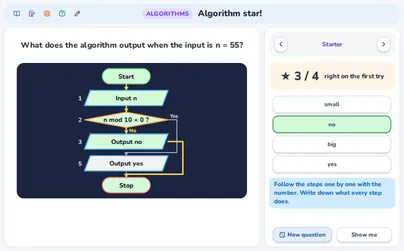
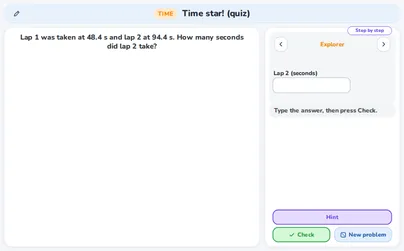 Time star! (quiz) QuizEndless practice with a score on the topic ‘Time: calendar, time line, time zones and the stopwatch’.Open
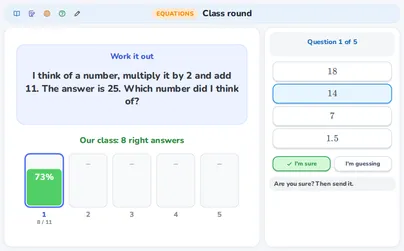
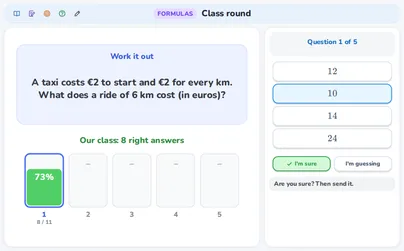
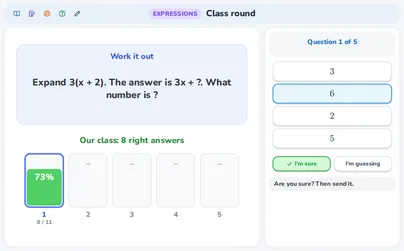
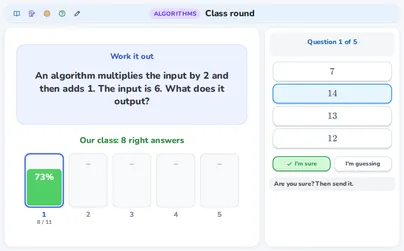
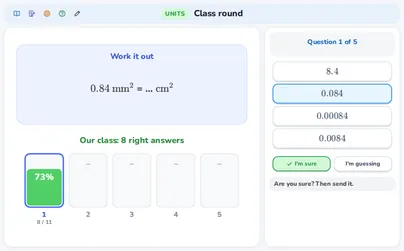 Class round: the whole class at once – Units and conversion Class roundFive questions for the whole class at once: definitions, rules, true or myth, and sums.Open
Applications that cover the topic in general4
These applications belong to the topic as a whole, not to one outcome.
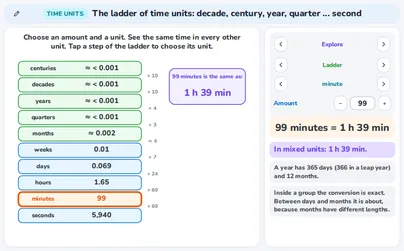 The ladder of time units: decade, century, year, quarter ... secondChoose an amount and a unit and see it in every other unit.Open
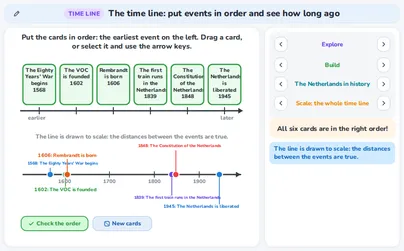 The time line: put events in order and see how long agoPut events on a time line in order, find how long ago they happened and line up your own life with history.Open
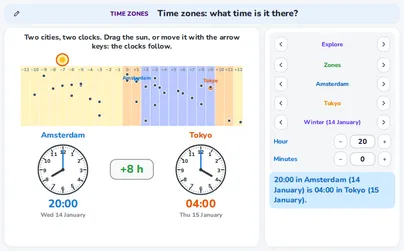 Time zones: what time is it there?Two cities, two clocks: drag the sun and the clocks follow.Open
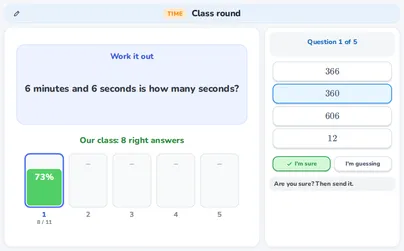 Class round: the whole class at once – Time: calendar, time line, time zones and the stopwatch Class roundFive questions for the whole class at once: definitions, rules, true or myth, and sums.Open